
Does Evil Exist?
Certainly it must! How else would I be able to hate things?

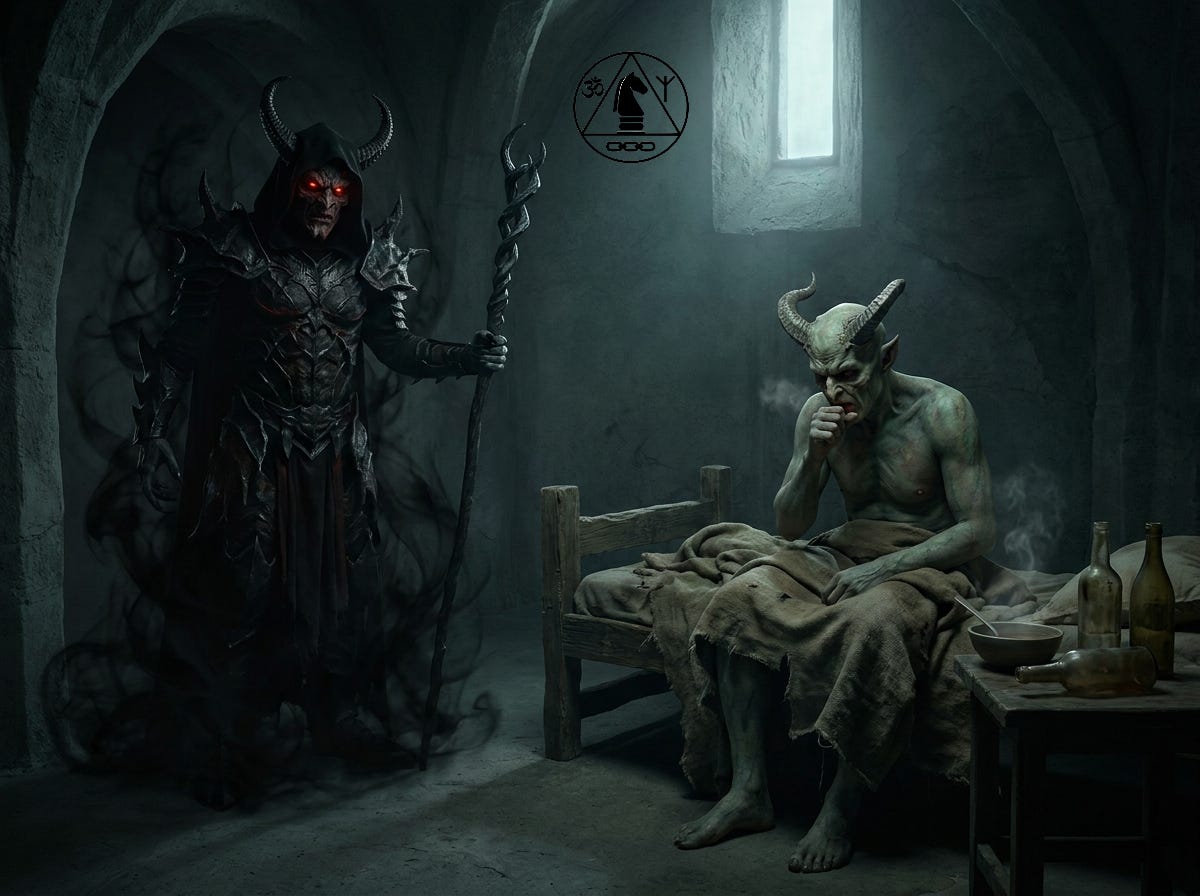
There is always a lot of talk out there that evil is prevalent among us, and coming to get us. You hear it on the news, in conversation, at church, in books, etc. That certain characters throughout history and today are indeed evil—dictators and greedy businessmen, murderers and child traffickers, politicians and medical insurance CEOs. The list goes on and on.
When something is considered evil, it is okay for people to hate it, to demonize it, to attack it, to kill it. What if, however, our entire idea of evil is flawed? What if nothing is evil? What if these people are, in fact, just spiritually sick?
When we view something as sick instead of evil, it changes our entire perspective on the matter. Instead of the evil being permanent and in need of being destroyed, it is now viewed as the person is experiencing a deficiency in something and has the possibility of healing. If society as a whole viewed criminals and crime itself as a form of sickness, the whole approach to justice would shift.
For example, take the alcoholic who habitually drives drunk. This person has multiple DUIs and has even had some dangerous wrecks, has hurt himself and others, and is destined to kill himself or someone innocent if his behavior continues. Is he evil for his actions? Or just sick?
Society would say that he is to be locked up, fined, punished for being such a reckless and evil individual. How could you just drive drunk all the time and risk killing people? Yet we all know that this punishment does little to stop society as a whole from drunk driving. There are bars and liquor stores and gas stations with booze on every corner of every city. Potentially, a cop could wait outside of any bar’s parking lot and pull over anyone leaving, knowing they most likely drank more than one drink and would easily be over the tiny threshold of .08% ABV. But they don’t practice this procedure because every city wants people to come downtown and drink at their bars, its bad for business to hinder drinking.
Is it the alcoholic’s fault that there exist so many opportunities to drink and drive around them? Does throwing this person in jail and charging him with his 5th DUI do anything to prevent him from repeating his actions? If he is incapable of change, is that what evil truly is?
Instead, if we look at him as suffering from a sickness, or even a handicap, it makes a little more sense. He is an alcoholic. If his alcoholism were attempted to be remedied rather than punishing him more and more severely, would that have a greater effect on preventing the unwanted reckless behavior? If he no longer drank, how could he still be an evil drunk driver? He could no longer drunk drive if he was sober. If he was sober for years and years, would he still be considered evil for being drunk and killing someone because he was drunk while driving in the past? Does society have any capacity for understanding change, understanding forgiveness, understanding sickness?
Many an alcoholic knows that their drinking gets them into trouble. They tell themselves that they will have only one this time, will control it this time, will not be like their father when they grow up, who drank every day, etc. They can be hyper-aware that their drinking is the problem, yet not be able to stop—not because they are evil, but because they are sick. They cannot control it. They are compelled. This is not fixed by punishment. Consequences mean nothing to a person who is drunk. Let’s play an even more interesting angle.
Someone murders someone else. They have bad anger and jealousy character defects. They were young and immature when it happened. They killed someone in a crime of passion, in a heated moment. Haven’t we all been extremely surprised by how angry we can get when someone cuts us off in traffic? All of a sudden we are burning red with anger and flipping off complete strangers, thinking we are somehow safe inside the car and behind our own rage. This happens to others in more extreme scenarios when they catch a loved one cheating on them, or feel someone has used them or taken advantage of them. The person may just need help maturing and understanding what to do or how to feel in these kinds of intense situations. I don’t find these people to be evil. They are just really sick, really immature, really unaware, really low on self-control, extremely compelled by how they feel—what their emotions tell them.
When we create a society entirely based on punishing evil behavior, it never actually heals anything. There are plenty of laws against killing, speeding, stealing, abusing, etc., yet these things still happen every single day. When you make laws and rules that only punish, it never “fixes” the evil; it merely keeps the uglier side of human nature in the darkness. People learn to not get caught and hide their impulses, learn to lie and blame—anything to keep the heat off themselves and protect their way of life.
As a child, I was constantly punished for bad grades. Year after year, I was punished by my parents and teachers, and even people I didn’t know would shame me about my bad grades, informing me they were disappointed in me. You would think that after noticing that my grades did not change, even after years of increasing punishments and shame, a new tactic might be introduced—but it never was. I had the ability to do well in school, sure. I just couldn’t bring myself to do it, couldn’t bring myself to care. I wasn’t stupid, though. I learned that it was much better to hide my grades and lie about everything related to school to keep my mother and father’s judgement at bay. All I learned was how to minimize and avoid punishment. I learned to be cunning. I learned to protect myself. I saw nothing wrong with lying to teachers and parents, or forging signatures and throwing away mail, to try and escape the constant abuse I was subjected to. Did all that lying and deceiving make me evil?
Furthermore, this is just about how all criminals are treated. They are not taught how to rehabilitate bad behaviors or to focus on new constructive processes. They are just further punished and fined and confined into places where even sicker people dwell. Society just doesn’t have the time, resources, or mercy to try and rehabilitate the sick.
It is very reminiscent of when I was sent to summer school every year as a punishment for my grades. I was placed in close proximity to other kids that got bad grades. These ones i met were even more cunning and reckless than me. I learned new ways to get out of and into trouble. I learned about weed and parties and girls, and that schools don’t really care much if I learned anything. If this punishment was so effective, why did I have to go every year? The answer it seems, is that they don’t care if it works or not, they just have to fulfill the desire to punish when someone doesn’t do what they are expected. I mean what are they supposed to do? Let high school kids figure it out on their own!
At what point do we realize that none of these punishments work? That framing all the defects of human character as evil does nothing to change anything? Do we really think that the person who preys on children for sexual pleasure is healthy? Sure, those actions are evil. But wouldn’t it be more realistic to realize that they are very sick—that they were most likely abused themselves as children, that they must have learned this type of behavior from somewhere outside themselves? Yet we are angry at their actions, and they don’t deserve mercy. We should just kill them...
When we treat the whole sick world as deserving of punishment and denial of love, how do you think that translates to ourselves when we make a mistake?
What happens when we notice “evil” in ourselves? Do we tell someone about it? Do we seek help? Do we accept it and try to heal it?
Or do we hate ourselves for it, punish ourselves for it, bury the thoughts and actions and pretend they don’t exist? Since we want to punish the whole world so severely for its shortcomings, how do you think we treat ourselves when we discover our own shortcomings?
We self-criticize ourselves, we beat ourselves, we delude ourselves, we tell ourselves we are unworthy of love, we change our reality itself. How conducive can these actions be to healing ourselves, to loving ourselves?
When did humankind, which is very well known to be inherently flawed, become unworthy of mercy—unworthy of understanding, unworthy of forgiveness, unworthy of growing, from ourselves?
The real point to understand is that however we treat others, treat the world, is exactly how we treat ourselves. When we believe that others are pure evil and worthy of only unmerciful treatment, then we can only treat ourselves in a similar manner.
When we don’t believe ourselves worthy of forgiveness, we become sicker and sicker. We begin to hold resentments for everyone. We never gain the ability to grow. We blame everyone and everything in our own deluded state. Thinking that everything and everyone is deserving of punishment, we punish ourselves.
The desire to punish must be let go. All the wrong we have done, and others have done to us, must be let go. Because for a person to be kept in jail, another person has to be the guard. I wonder who we have made our own prison guard. I wonder who we have made our own prisoner.
In the end, it doesn’t matter who is the prison guard or who is the prisoner. Both are kept in a cell.
When we realize that the world and ourselves are just sick, not evil, then can we begin to let go of hate. Because it is only acceptable to hate things that are evil. It makes it OK to commit crimes against those that are evil. It is not OK however to commit crimes against people that are just sick. With that understanding, it isn’t too hard to understand why people like to believe in so much evil. They must satisfy the desire to punish, the desire to hurt others. To make themselves feel superior.
May we all learn to forgive and be merciful, so that we can forgive and be merciful to ourselves.